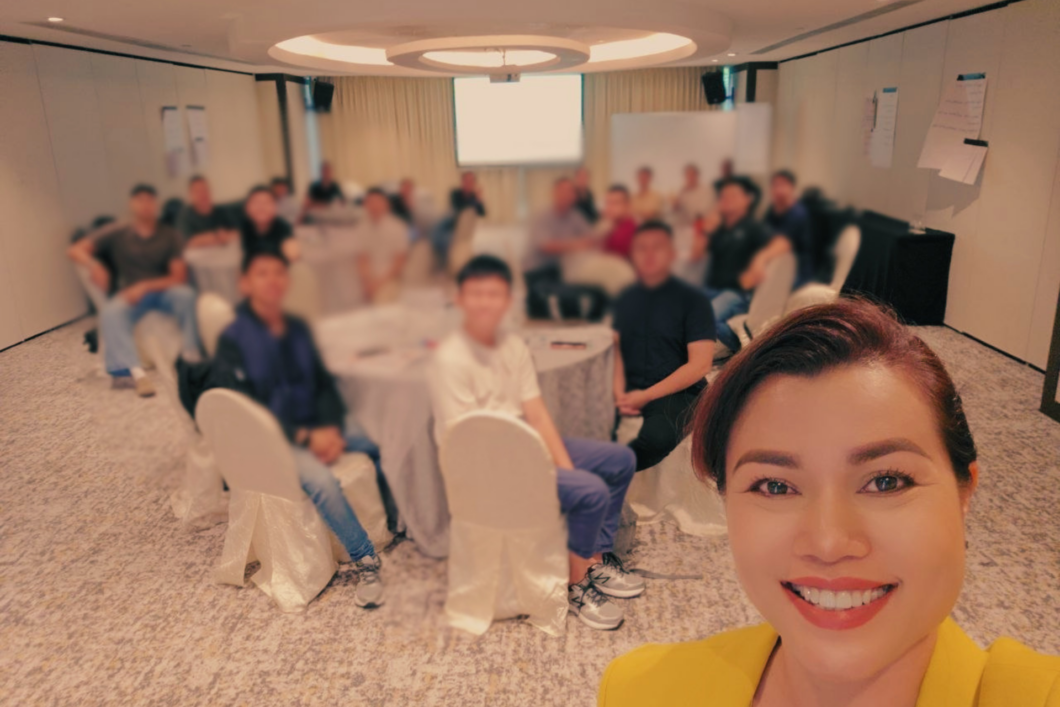
A good reminder from a recent session:
Many people don’t struggle with presentation skills because they lack tips. They struggle because real-world conditions don’t allow them to use those tips.
In reality, presentations often happen when:
- you’re feeling nervous (especially when presenting upwards)
- you’re short on time
- and you can’t remember everything you planned to say
So the issue isn’t knowledge.
It’s execution under pressure.
What Actually Works (When Time Is Limited)
Instead of adding more techniques, we focused on simplifying three things:
1. Organising your thoughts
When time is tight, complexity works against you.
You don’t need a perfect script.
You need a clear structure:
- What’s the main point?
- What are the 2–3 key ideas that support it?
- What does the audience need to do or understand after?
If this isn’t clear in your head, it won’t be clear in your delivery.
2. Staying on track
One of the biggest fears is: “What if I forget what to say?”
That usually happens when people rely on memorisation.
A more reliable approach is to use mental anchors:
- A simple outline
- Key phrases
- Logical flow
This gives you flexibility.
Even if you lose a sentence, you don’t lose your direction.
3. Preparing without over-preparing
More preparation doesn’t always mean better preparation.
When time is limited, focus on:
- clarifying your message
- anticipating 1–2 key questions
- rehearsing your opening and closing
That’s enough to create confidence and control.
The Real Shift
During the session, the change was visible quite quickly.
Not because participants became more “confident” overnight,
but because their thinking became clearer.
And when thinking is clear:
- delivery becomes more natural
- pauses feel intentional
- and the message lands better
A Better Way to Think About Presenting
Presentation skills are often treated as performance skills.
In reality, they are thinking skills first.
If your ideas are structured, focused, and relevant,
you don’t need to rely on memorisation or over-rehearsal.
A Question to Reflect On
If you had to present tomorrow with only 15 minutes to prepare:
What would you focus on first?