We’ve all seen it. Employees file into a workshop, arms crossed, phones face-down on the table — present in body, absent in spirit. They don’t know why they’re there. Nobody told them. And without that why, even the most well-designed session becomes background noise.
In my previous post, I talked about disengaged employees attending workshops without any understanding of their buy-in – the result being low motivation, low retention, and ultimately, a quiet drain on company resources. Today, I want to share the other side of that story.
“When the buy-in is clear, people show up differently. They arrive with openness. With curiosity. With the quiet question: what can I bring back from this?”
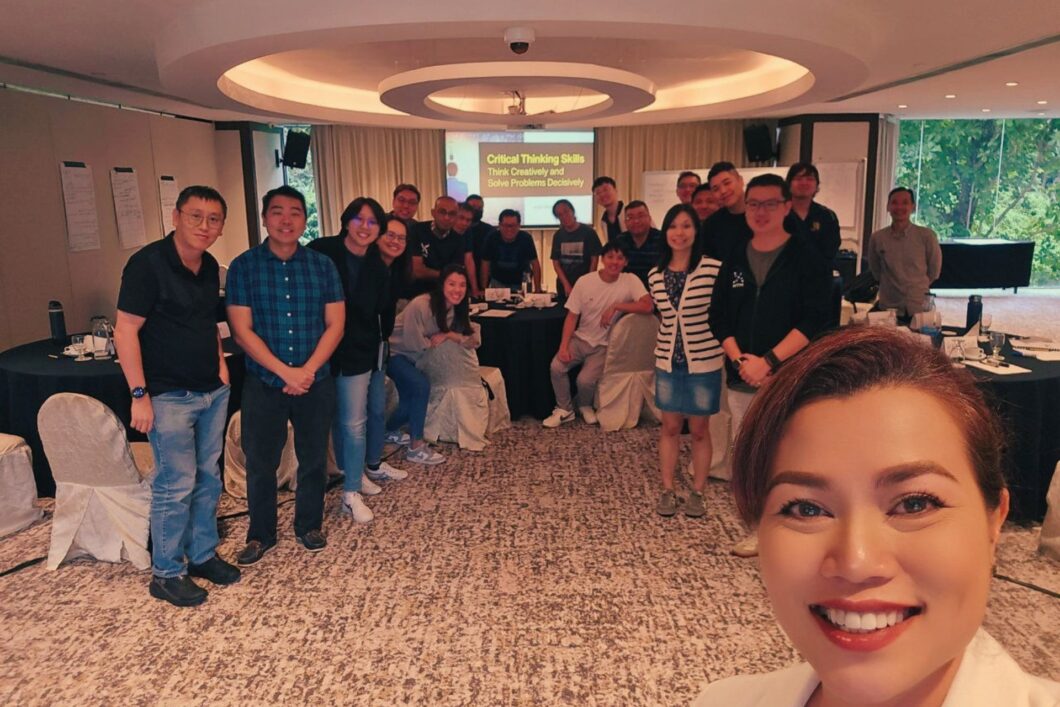
A recent session I facilitated was exactly that kind of experience. And here’s what made it different: the topic wasn’t chosen by the team. Their leaders chose it for them.
That could have gone badly. Imposed agendas often do. But this leadership team did something most don’t – they did the groundwork before the workshop ever began.
Here’s what they got right:
- They named the problem. Before the session, the team was clearly briefed on the communication gaps that had been surfacing – specifically with external stakeholders. There was no mystery, no vagueness. Just an honest acknowledgement: here’s what’s not working, and here’s what we’re going to do about it.
- They connected the workshop to the problem. The team knew in advance what the session would cover and how it was designed to close the specific gap they’d been told about. The workshop had a clear purpose before it began.
- They made it real. The leadership team worked closely with me to tailor the content – weaving in their industry context and, crucially, real scenarios currently playing out in their corporate environment. Attendees weren’t solving hypothetical case studies. They were solving their own work problems, live, in the room. And they got to walk out with actual solutions.
That last point is where the breakthroughs happened. When a workshop uses real friction from a team’s real world, it stops feeling like training. It starts feeling like problem-solving. The lines blur in the best way – and the learning sticks because it was immediately, visibly useful.
This is something I say often, and I’ll say it again here because it bears repeating: a team’s engagement begins at the top.
Not with HR.
Not with the facilitator.
Not with the agenda.
With the leaders who choose to do the quiet, intentional work of preparation – who communicate clearly, align honestly, and invest in making sure their people arrive ready to receive.
When the stage is set right, transformation doesn’t need to be forced. It happens naturally – because the people in the room finally know why they’re there.